

- The Basics of Boat Electronics
- Marine Radio basics
- Master the Boat Wiring Diagram 5 Ways: A priceless guide
- AIS (Automatic Identification System) An Introduction and Practical Guide
- Installing a Bilge Pump
- Fuses for Boats – Fusing Marine Electrical and Electronic Systems
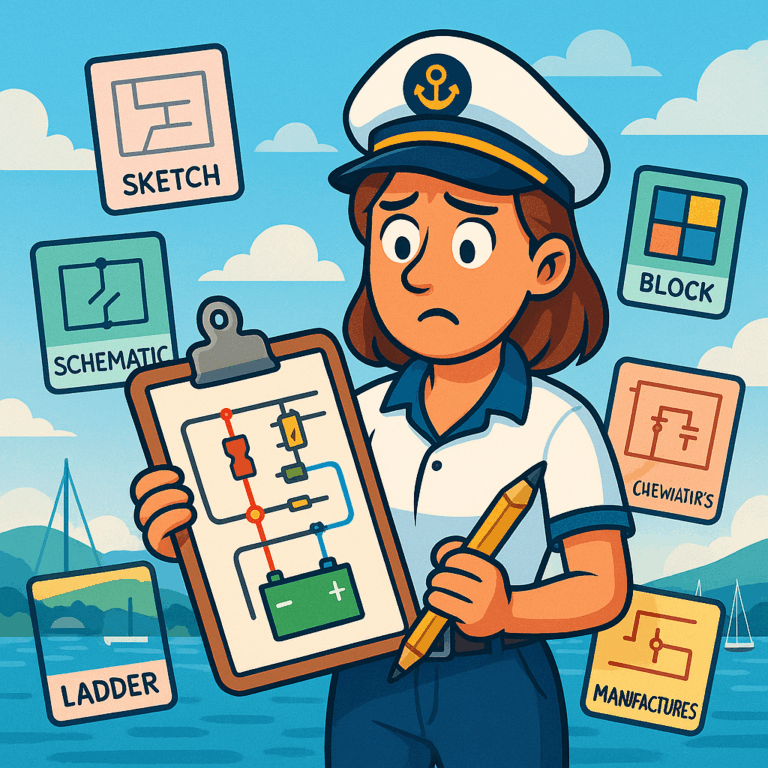
Owning a boat is a fantastic adventure, but it comes with its own set of challenges. An important skill that you can learn is how to read and create electrical wiring diagrams, including a boat wiring diagram. This guide will help you understand your boat’s electrical systems, making your boating experience safer and more enjoyable.
Understanding your boat’s electrical systems, including the boat wiring diagram, is crucial for ensuring safety and reliability on the water. Proper knowledge can prevent potential hazards and costly repairs. If you own a launch or sailing yacht up to around 40 feet, learning to read and create electrical wiring diagrams is a valuable skill.
This guide will introduce you to the main types of electrical diagrams, explain how to create them, and cover essential topics like labelling and documentation. By the end of this guide, you’ll have the knowledge to handle your boat’s electrical systems with confidence.
I will only cover Extremely Low Voltage (ELV) systems in this guide. This means systems of less than 50Vdc, such as the common 12 and 24Vdc systems found on small vessels.
Why Use Boat Wiring Diagrams?
Boats have multiple electrical systems: batteries, engines, lighting, navigation instruments, bilge pumps, and more. Without clear diagrams, it’s easy to get lost in the wiring, risk mistakes, or overlook critical safety features.
Electrical diagrams help you:
- Visualise the system layout before starting work.
- Identify components and connections quickly.
- Troubleshoot faults by tracing circuits.
- Plan upgrades or additions without guesswork.
- Ensure compliance with marine electrical standards.
These boat wiring diagrams help you see how power flows through your boat’s systems. This makes troubleshooting easier, ensures safe installations, and enables you to communicate effectively with marine electricians or suppliers.
Types of Boat Wiring Diagram
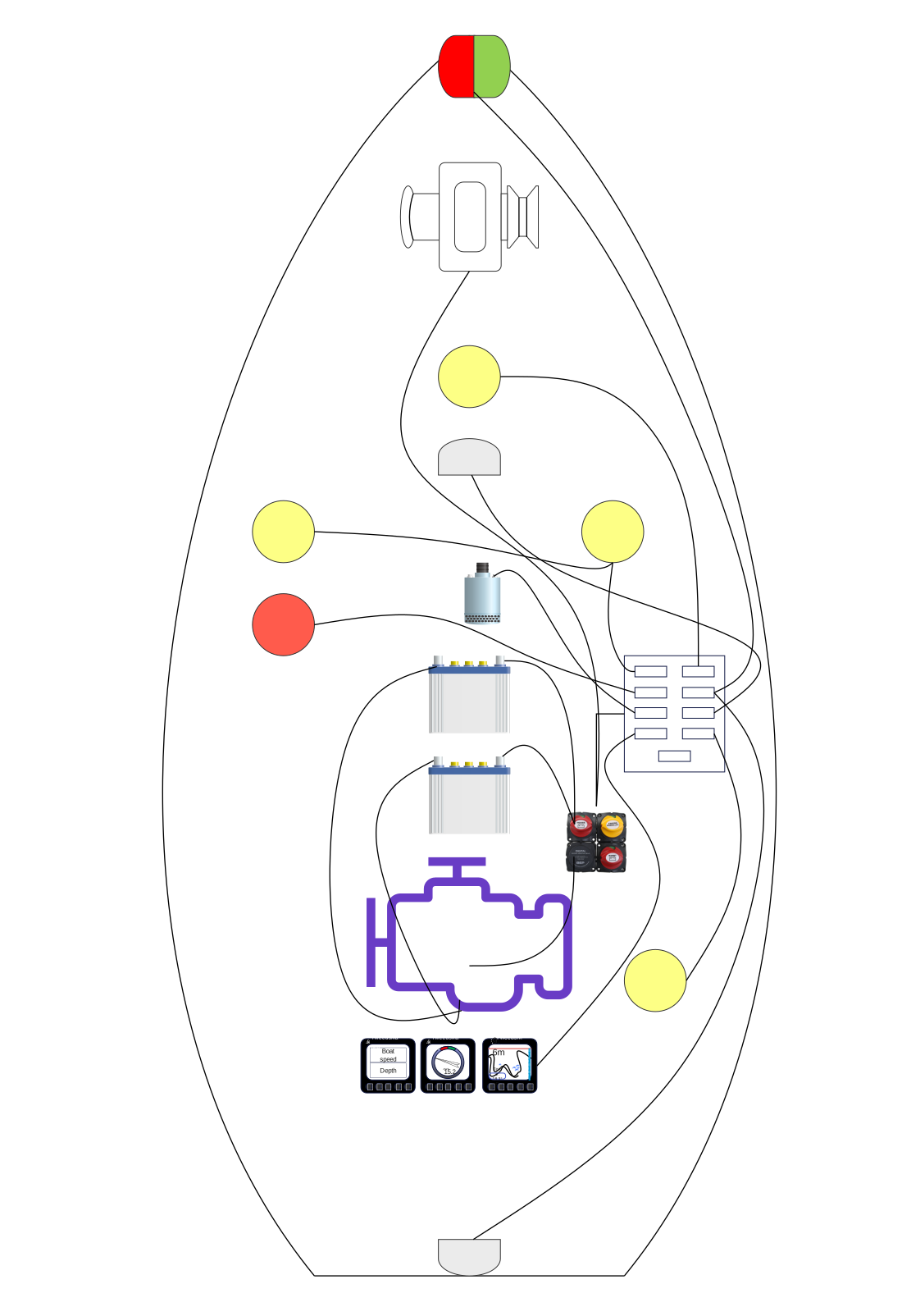
Sketch Diagram
A simple drawing showing the physical location of equipment and wiring routes on your boat—batteries, engine, switch panels, lights, pumps, and more. This is your spatial map for planning.
Ladder Diagram
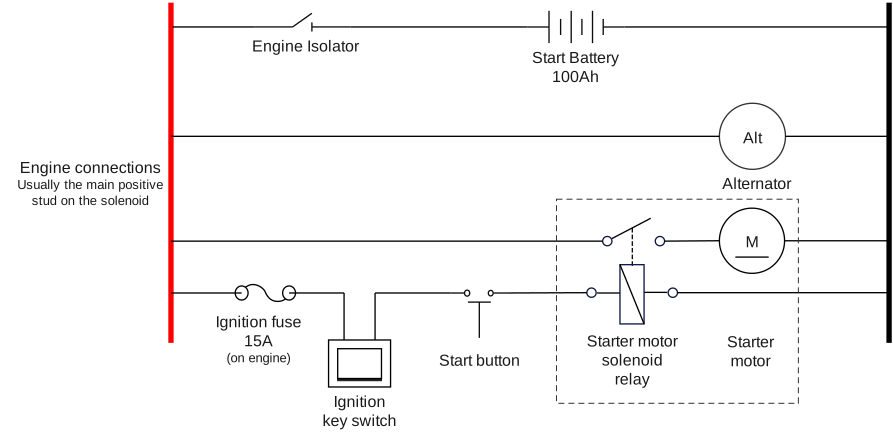
Represents electrical circuits like a ladder, with two vertical rails (power supply lines) and horizontal rungs (circuits). Shows how switches, relays, fuses, and loads connect.

How to draw a ladder diagram:
- Draw two vertical lines representing positive and negative supply rails.
- Add horizontal rungs for each circuit.
- Place symbols for switches, fuses, relays, and loads on the rungs.
- Label each component clearly.
Ladder Diagram (Engine Start Circuit)
The next few examples will compare the same engine start circuit. Here is the ladder diagram taken from the larger example above. This type of diagram does not provide any indication of the parts’ locations; however, if you are familiar with engine start circuits, you will know where to find the parts.
Schematic Diagram
A detailed boat wiring diagram using standardised symbols to show electrical connections and functions at the component level.
How to draw a schematic diagram:
- Use standard symbols for batteries, switches, lamps, motors, etc.
- Connect symbols with lines representing wires.
- Indicate wire colours and sizes if possible.
- Show power sources and grounding points.
- Keep the layout logical and grouped by function.
Here is the schematic version of the ladder diagram above. In this case, physically related parts are grouped by dotted lines, but this may not always be the case.
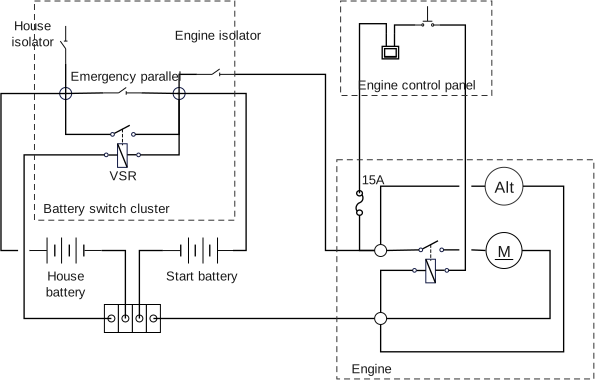
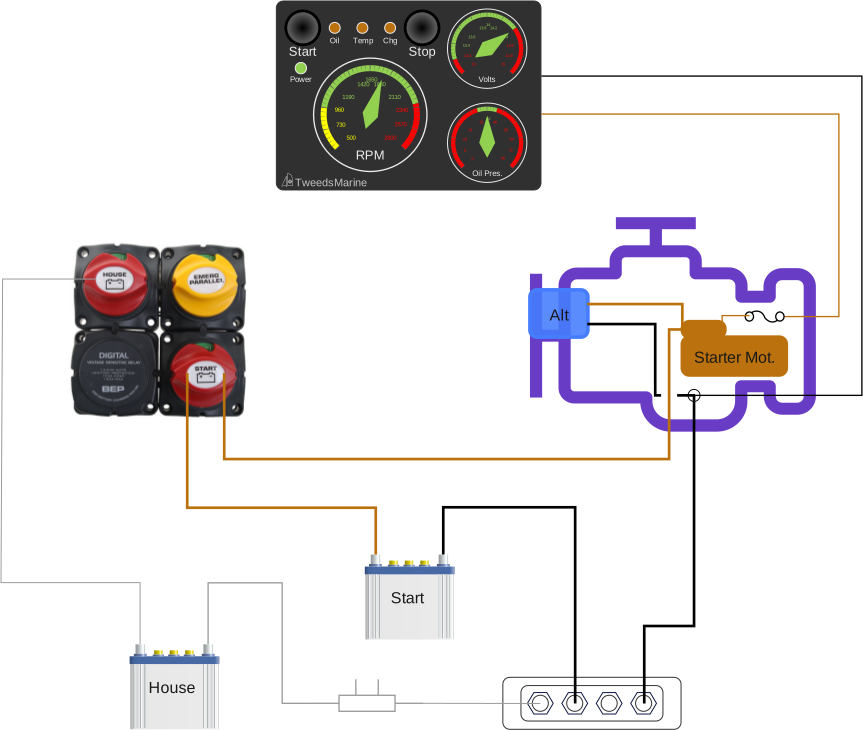
To make life easier for clients, I often draw a schematic in a more pictorial style boat wiring diagram. It gives them the same information but does not expect much familiarity with symbols.
Engine Manufacturers Diagram
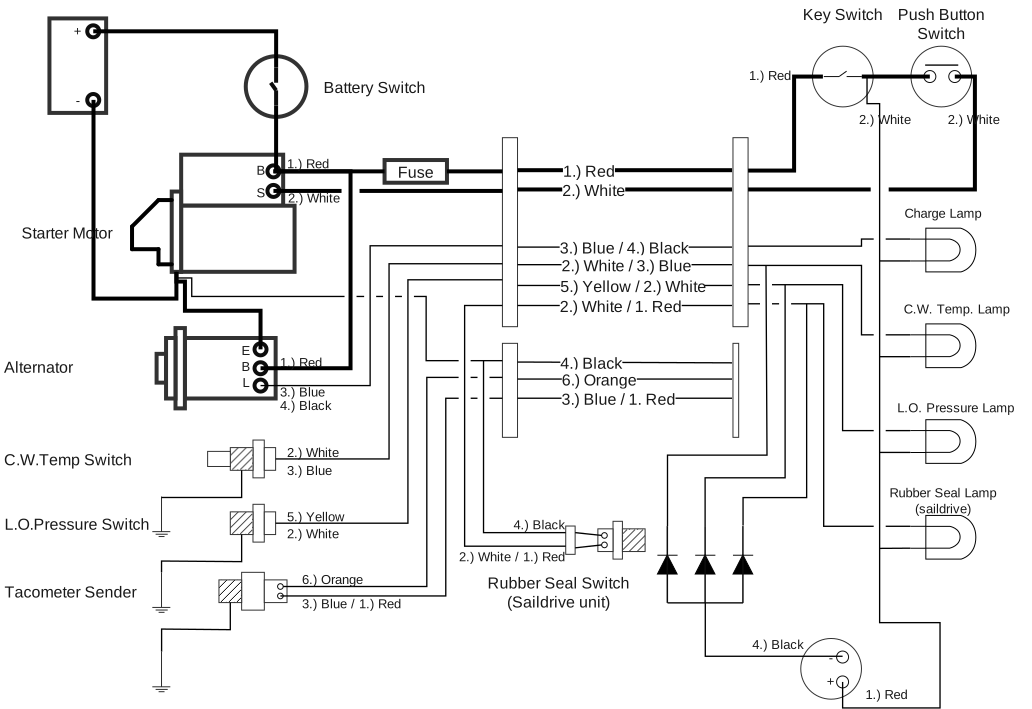
These are detailed diagrams from engine or equipment manufacturers, specific to their products and often drawn in their in-house style. Helpful for installation and servicing, but often complex. Here I have drawn up a fairly typical example loosely based on Yanmar’s 1GM. I have emphasised the parts of the diagram that are shown in the preceding diagrams.
Block Diagram
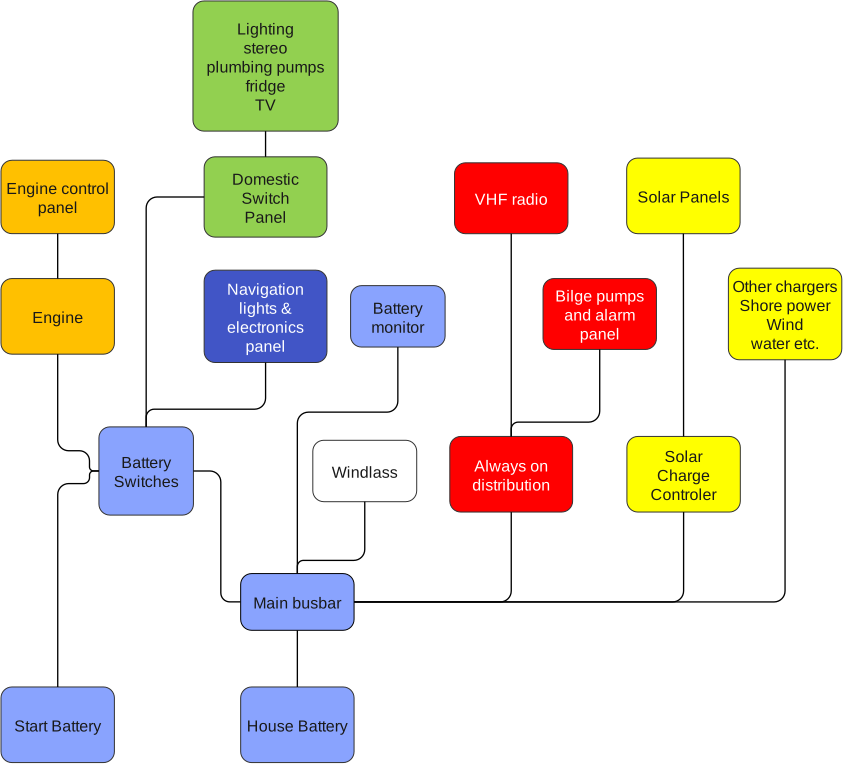
This boat wiring diagram is a simplified overview showing major components or systems as blocks connected by lines. Useful for conceptual planning. You can colour-code groups of related blocks. Here I show the always-on safety circuits in red, auxiliary charging in yellow, the battery system in light blue, etc..
Comparing Diagram Types: Pros and Cons
There is no need to choose any particular type of diagram; use what works for you. Sometimes you will iterate through several types of diagrams before settling on the type or types that will go into your documentation.
| Diagram Type | Pros | Cons | Best Use |
|---|---|---|---|
| Sketch Diagram | Easy to create. shows physical layout | Lacks electrical detail | Initial planning and spatial reference |
| Ladder diagram | Clear circuit flow: good for control logic | Can be complex for large systems | Circuit design and troubleshooting |
| Schematic diagram | Detailed; standardized symbols; precise | Requires learning symbols and conventions | Detailed design and fault finding |
| Block Diagram | Simple overview of system relationships | No wiring detail | Conceptual planning |
| Manufacturer Diagram | Specific to equipment, detailed | Often complex; may be hard for beginners | Equipment installation and repair |
Standards or the lack of standards
There are lots of standards governing the electrical systems in boats such as American Boat and Yacht Council (ABYC) and the Australian/New Zealand (AS/NZ) standards for marine electrical systems AS/NZS 3004.2:2019, in Europe there are the European Recreational Craft Directive, the IEC 60092 series standards and ISO 10133 for DC systems on small craft.
All of this standardisation is not standard across the various ‘standards’, and you will often come across a mix among your boat’s manual, parts of which may have been manufactured on different continents and in different decades. Here is a small sample of the symbols that you may come across. All of the symbols on each row can mean the same thing, depending on where you are, who drew the diagram and how old it is!

How to Label and Document Your Boat’s Wiring
Proper labelling and documentation are essential for safe, efficient, and trouble-free electrical work on your boat. Clear labels and well-kept records help you and others understand the wiring layout, simplify maintenance, and reduce the risk of errors or accidents. The value of the drawings is very much reduced, and a lot of time will be lost if the labels on the drawings do not match the labels on the physical cables. Remember that when you are paying a professional, time is money, which is why I said in the title “a priceless guide”.
Best Practices for Labelling Wiring
Use Durable Labels: Marine environments are harsh—labels should be waterproof, UV-resistant, if outside, and securely attached. Use heat-shrink tubing with printed labels, laminated tags, or marine-grade adhesive labels. A good mid-priced technique is to use printed vinyl labels covered with clear heat-shrink tubing (some of the cables in the centre image below).

Label Both Ends: Always label wires at both ends, near terminals or connectors, so you can identify circuits without tracing the entire length. Sometimes it is useful to put two labels on each end. One nearest to the end indicates what it connects to, and another label alongside indicates where the cable goes; this is most useful on control cables that may otherwise be difficult to identify.
Include Wire Function and Destination: Labels should indicate the wire’s purpose (e.g., “Nav Light Port,” “Bilge Pump +12V”) and, if possible, the destination or source.
Use Consistent Colour Coding: Follow a consistent colour scheme for wire insulation to indicate function:
- Positive DC power: Red
- Negative DC or ground: Black (or yellow)
- Bonding: green
- AC power: Brown (live), blue (neutral), green/yellow (earth)
Number or Code Circuits: Assign circuit numbers or codes that correspond to your wiring diagrams. For example, “Ckt 3 – Cabin Lights.”
Label Components and Panels: Switch panels, fuse boxes, and battery switches should also be clearly labelled with circuit names and ratings.
Documenting Your Wiring
- Maintain a Wiring Log: Keep a written or digital log listing each circuit, wire gauge, colour, label, and connected components. This might not be necessary on a small boat, but if you have a lot of technology aboard, or if your boat is larger, it is a very good idea.
- Update boat wiring Diagrams: Whenever you modify wiring, update your diagrams and labels immediately. This is often overlooked; do it as part of the job and don’t leave it for another day.
- Store Documentation Safely: Keep copies of wiring diagrams, logs, and manuals in a waterproof folder onboard and a digital backup offboard.
- Use Clear Terminology: Avoid ambiguous terms (such as ‘battery’; which battery?); be specific about component names and locations.
Wiring Log Template

Proper labelling and documentation save time and money by making troubleshooting straightforward and ensuring safe, compliant installations.
Colour Code Comparison
Use standard wire colours where possible; you can find the whole rainbow of colours in legacy systems and on some production boats. At least stick to red for positive DC and black for the negative.
| Wire Function | ABYC Colour Code | AS/NZ Colour Code |
|---|---|---|
| Positive DC (+) | Red | Red |
| Negative DC (–) | black | Black (yellow if confusion with AC neutral is possible) |
| Ground / Earth | Green or Green/Yellow | Green or Green/Yellow |
| Switched Positive | Yellow | Not defined, but a lot of electronic equipment comes pre-wired with yellow as the remote power switch. |
| AC Live (Line) | Brown | Brown |
| AC Neutral | White or Blue | Blue |
| AC Earth (Protective Earth) | Green/Yellow | Green/Yellow |
Summary
Understanding and creating boat wiring diagrams for your boat is an invaluable skill that enhances safety, reliability, and efficiency on the water. By following the guidelines and best practices outlined in this guide, you can confidently handle your boat’s electrical systems, troubleshoot issues, and communicate effectively with marine electricians and suppliers. Remember, the knowledge you gain here not only helps in maintaining your boat but also empowers you to make informed decisions and avoid potential hazards. So, take the time to practice and apply your new skills, and enjoy the peace of mind that comes with knowing your boat’s electrical systems inside and out. Happy boating!
Take things further with my article on the basics of boat electronics or my deeper dive into the basics of marine electronics networking.


